
How to Choose Soft Cotton Dog Shirts: 2026 Guide
Table of Contents
- What Makes a Soft Cotton Dog Shirt Worth Buying
- How to Measure a Dog for Clothes: A Step-by-Step Sizing Guide
- Dog Shirt Sizing Guide: Choosing the Right Fit for Comfort
- Cotton vs. Synthetic Fabrics: Breathability and Skin Health
- How to Wash Dog Shirts Without Shrinking or Irritating Skin
- Features to Look For: Stitching, Seams, and Closures
- Common Mistakes When Buying Soft Cotton Dog Shirts
- Frequently Asked Questions
Last Updated: October 1, 2026
What Makes a Soft Cotton Dog Shirt Worth Buying
Soft cotton dog shirts are pet apparel made from cotton fabric chosen for its soft feel, breathability, and low irritation risk against a dog's skin. The difference between a shirt your dog tolerates and one they actually relax in comes down to fabric specs, not marketing claims. This guide from MyRadTee walks through the numbers most shoppers never check, so you can pick a shirt that fits well and stays comfortable.
Most shoppers judge a dog shirt by how it looks in the product photo. That's backwards. Two shirts can look identical online and behave completely differently after one wash, because the real differences live in fabric weight, weave, and seam construction.
Below, we'll show you exactly how to measure your dog, read a size chart, and spot quality construction before you buy.
Fabric Weight and GSM: The Number Most Shoppers Ignore
GSM (grams per square meter) measures how heavy and dense a fabric is. It's the single most useful number for predicting how a shirt will feel and wear.
Lightweight cotton knits often land in the 150-160 g/m² range. That's the sweet spot for dog shirts: light enough for air circulation, heavy enough to hold shape after washing.
Here's what the numbers mean in practice:
- Under 140 g/m²: Thin, may cling and tear easily
- 150-170 g/m²: Lightweight, breathable, good for daily wear
- Over 200 g/m²: Heavier, warmer, better for cold weather but less breathable
Weave Density, Stretchability, and Range of Motion
Weave density determines how much the fabric moves with your dog instead of against them. A tighter weave resists snags; a looser knit stretches more.
- Check the leg openings for friction reduction
- Watch for seam irritation under the front legs
- Confirm the shirt stays put without velcro closures digging in
How to Measure a Dog for Clothes: A Step-by-Step Sizing Guide
Accurate measurements take about five minutes and prevent every return. You need a soft measuring tape and a calm dog, ideally standing.
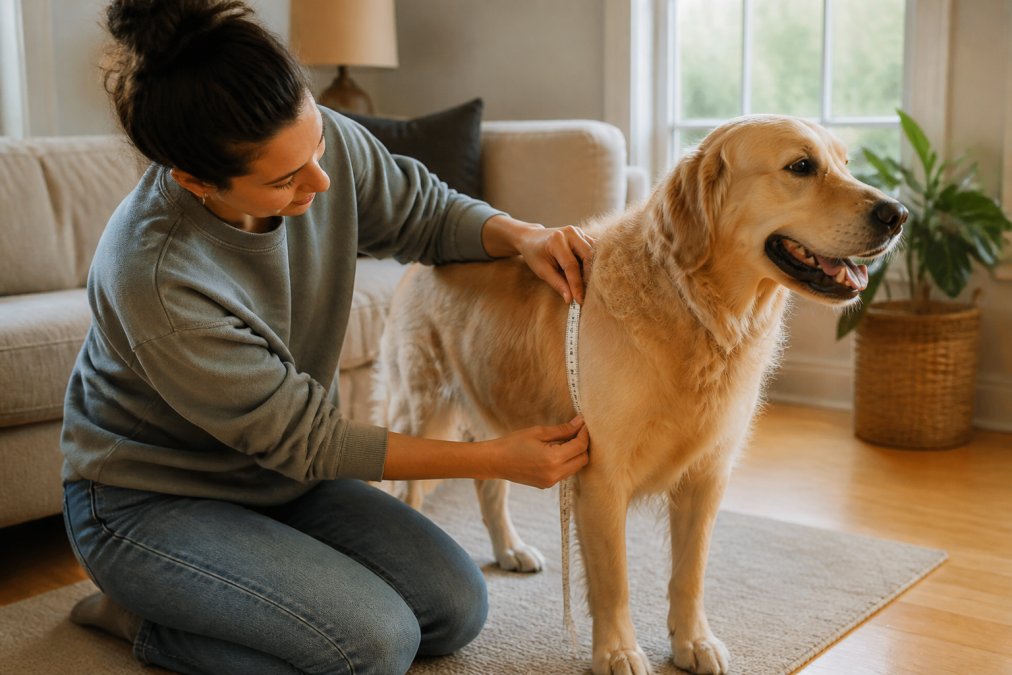
Here's the process:
- Girth (chest): Wrap the tape around the widest part of the ribcage, just behind the front legs. This is the most important number.
- Back length: Measure from the base of the neck to the base of the tail along the spine.
- Neck: Measure around the neck where the collar sits.
- Chest depth: Measure from the top of the shoulder down to the bottom of the ribcage.
Small Breeds vs. Large Breeds: Size Chart Accuracy Matters
Size chart accuracy matters more for small breeds and deep-chested large breeds than for anyone else, because their proportions vary wildly within the same weight class.
- Small breeds: prioritize girth and back length
- Deep-chested breeds: prioritize chest depth
- Stocky breeds: prioritize girth over length
Dog Shirt Sizing Guide: Choosing the Right Fit for Comfort
The right fit leaves two fingers of space under the girth and doesn't restrict the shoulders. That's the whole rule.
| Fit Issue | What It Looks Like | Fix |
|---|---|---|
| Too tight | Fabric pulls at chest, dog freezes | Size up in girth |
| Too loose | Shirt slides sideways | Size down or try another cut |
| Too short | Shirt rides up the back | Check back length |
| Too long | Fabric drags when walking | Check back length |
| Bunches at shoulders | Restricted range of motion | Look for stretchier fabric |
Cotton vs. Synthetic Fabrics: Breathability and Skin Health
Cotton wins on breathability and skin health for most dogs, especially those with sensitive skin. Natural fibers let air circulate and wick moisture away from the coat.
Here's the comparison that matters:
- Cotton: Breathable, soft, good thermal regulation, holds dye well
- Polyester: Durable, fast-drying, but traps heat
- Blends: Balance both, but check the ratio
How to Wash Dog Shirts Without Shrinking or Irritating Skin
Wash in cold water on a gentle cycle, then air dry or tumble on low. That combination prevents shrinking and protects the fabric's softness. But for dogs with sensitive skin, the wash routine matters as much as the fabric choice, residue left in the fibers is a common trigger for scratching that owners blame on the shirt itself.
Golden Retriever Unisex Softstyle →
The Hypoallergenic Wash Protocol
If your dog scratches at a cotton shirt, the detergent is often the culprit, not the cotton. Here's the sequence that minimizes residue:
- Cold water, 60-80°F. Hot water opens cotton fibers and lets detergent and soil settle deeper into the weave. Cold water keeps the fiber structure tight and rinses cleaner.
- Fragrance-free, dye-free detergent. Look for detergents labeled "free and clear" or "free of dyes and perfumes." These omit the optical brighteners, synthetic musks, and dyes that leave residue on fabric and transfer to skin.
- Extra rinse cycle. One rinse often leaves surfactant behind in dense cotton knits. Add a second rinse to flush residual detergent.
- No fabric softener, ever. Softener coats fibers with a waxy film that traps residue and reduces absorbency. It also builds up over repeated washes and can make fabric feel stiffer, not softer.
- Half cup of white vinegar in the rinse. Vinegar helps strip detergent residue and naturally softens cotton without leaving a film. It rinses out completely, so there's no vinegar smell on the dried shirt.
Why Residue Matters More Than Fabric
Dogs with sensitive skin react to what's left in the fabric, not the fabric itself. A 100% cotton shirt washed in a heavily perfumed detergent can trigger more scratching than a cotton-poly blend washed in fragrance-free detergent. That's why the wash routine is part of the fabric decision, not separate from it.
Preventing Shrinkage
Cotton shrinks because heat and agitation cause the fibers to relax and contract. Two habits prevent it:
- Cold water only. Warm or hot water is the single biggest cause of shrinkage.
- Air dry or low tumble. High heat in the dryer shrinks cotton fast. If you must use a dryer, low heat and remove the shirt while slightly damp, then lay flat to finish drying.
Drying and Storage
Air drying is gentler than machine drying and preserves softness longer. Lay shirts flat or hang them, but avoid hanging by the neckline, wet cotton stretches under its own weight. Once dry, store folded rather than on hangers to keep the shape.
Features to Look For: Stitching, Seams, and Closures
Durable stitching and flat seams separate a shirt that lasts from one that falls apart. Check three spots before buying.
Closures matter too:
- Velcro: Easy on, easy off, but can snag fur
- Pullover: No hardware, best for calm dogs
- Snaps: Secure, but check they're covered
Medical Recovery and Hygroma Support
Soft cotton shirts can help dogs recovering from surgery or managing hygroma, a fluid-filled swelling that develops over pressure points like elbows.
- Choose a snug but non-restrictive fit
- Wash daily to keep the area clean
- Check for rubbing at the edges
Common Mistakes When Buying Soft Cotton Dog Shirts
Buying by weight instead of measurement is the mistake that causes most returns. Weight ranges are too broad to be reliable.
Other common errors:
- Ignoring GSM and buying thin fabric that tears
- Choosing synthetic blends for dogs with sensitive skin
- Skipping the label and missing polyester content in heather colors
- Using fabric softener and trapping irritating residue
- Buying a shirt that restricts the front legs
Frequently Asked Questions
What is the best fabric for dog clothes?
Cotton, especially ring-spun or pima cotton, works well for most dogs because it is breathable, soft against the skin, and allows air circulation. Look for lightweight cotton around 4.5 oz/yd² (153 g/m²) for year-round comfort. Blends with a small amount of polyester can add stretchability, but 100% cotton remains the top choice for sensitive skin and dogs prone to skin inflammation. Always check for hypoallergenic, non-toxic dyes and Oeko-Tex certification when available.
How do I know if a dog shirt is soft enough for my pet?
Feel the fabric between your fingers before buying, or check the product description for terms like ring-spun cotton, pima cotton, or lightweight weave. Ring-spun cotton is smoother and softer than standard cotton because of how the fibers are twisted. A fabric weight around 4.5 oz/yd² signals a lightweight, breathable shirt. Also look for tear-away labels and flat seams, since rough tags and bulky stitching cause seam irritation on a dog's coat.
How do I measure my dog for a comfortable shirt fit?
Use a soft measuring tape to measure three points: the base of the neck, the widest part of the chest (just behind the front legs), and the length from the base of the neck to the base of the tail. Add about two fingers of slack to each measurement for fit and comfort. Compare your numbers to the brand's size chart, not to a generic size like medium. If your dog falls between two sizes, size up for range of motion.
How should I wash dog shirts to prevent shrinking and skin irritation?
Turn the shirt inside out and wash in cold water on a gentle cycle with a fragrance-free, hypoallergenic detergent. Skip fabric softener, which leaves residue that can irritate sensitive skin. Tumble dry on low or air dry flat to reduce shrinkage. Avoid washing with heavily soiled items or towels that create friction. For dogs with allergies, run an extra rinse cycle to remove all detergent residue from the fabric.