
How to Prevent Dog Shirts From Shrinking
Table of Contents
- Why Pet Clothes Shrink and What Causes It
- Understanding Fabric Types: Cotton, Synthetics, and Blends
- How to Wash Graphic T-Shirts Properly
- Best Way to Dry Cotton Pet Clothes
- Reading and Following Garment Care Labels
- How to Stretch Out a Shrunken Dog Shirt
- Step-by-Step Prevention Checklist
- Frequently Asked Questions
Last Updated: August 31, 2026
Why Pet Clothes Shrink and What Causes It
Pet clothes shrink due to heat, moisture, and fabric composition. When fibers are exposed to warm water and agitation during washing, they contract and lose their original shape. Heat is the most common culprit, high water temperatures cause fibers to relax and contract permanently, while tumble drying accelerates this process dramatically.
Agitation during the wash cycle also plays a significant role. Aggressive washing action causes fibers to compress against each other, leading to permanent dimensional changes. Understanding these mechanisms is the first step to prevention.
Understanding Fabric Types: Cotton, Synthetics, and Blends
Different fabric fibers respond to water and heat in distinct ways. Cotton is a natural fiber that absorbs moisture readily, causing it to swell during washing. As it dries, the fibers contract, pure cotton dog shirts can shrink by 5-10% if washed incorrectly (peer-reviewed research).
Synthetic fibers like polyester are engineered to resist moisture absorption and heat damage. They maintain their shape better through repeated washing cycles, though they can still shrink if exposed to temperatures above 140-160°F (the FDA). Blended fabrics combine natural and synthetic fibers to achieve the best of both worlds. A 50/50 cotton-polyester blend offers the softness of cotton with the shrinkage resistance of polyester.
When evaluating fabric types for your dog's wardrobe, check the garment care label for fiber content. Cotton-dominant blends require more careful washing and drying, while polyester-dominant blends offer more forgiveness with temperature and agitation.
How to Wash Graphic T-Shirts Properly
Washing graphic t-shirts requires a gentler approach than everyday laundry. Always use cold water, it prevents fiber relaxation and maintains the integrity of both the fabric and any printed graphics. Cold water is equally effective as warm water for cleaning while dramatically reducing shrinkage risk.
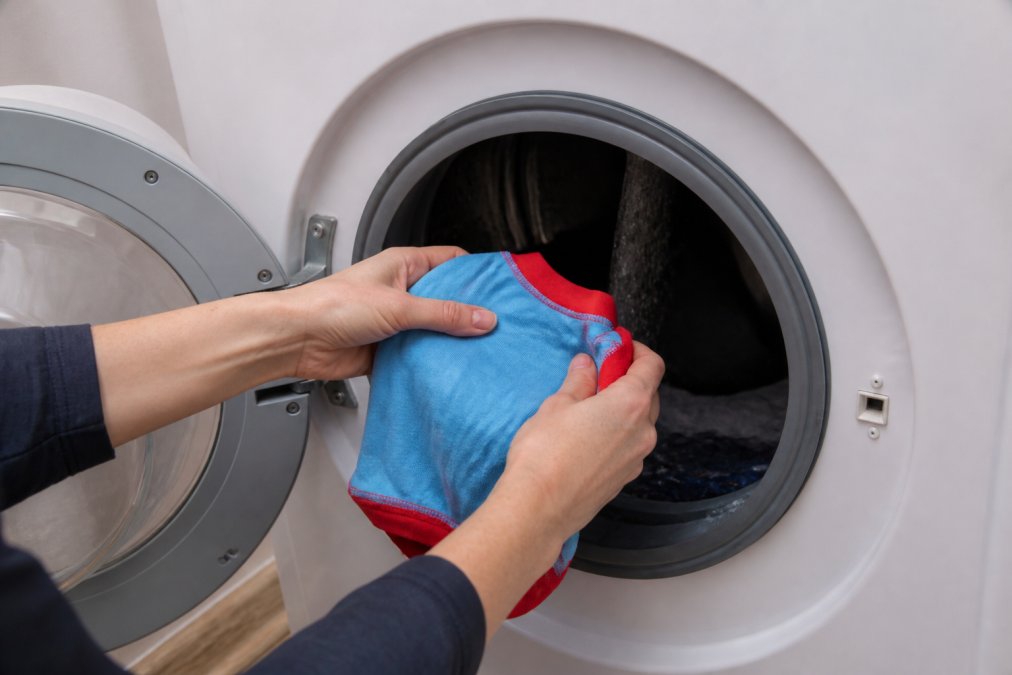
Select a gentle wash cycle on your machine. Gentle cycles use less agitation and shorter wash durations, reducing mechanical stress on fibers. Turn your dog shirts inside out before washing to protect printed designs from fading and reduce friction between the graphic and other garments.
Use a mild detergent and avoid bleach entirely. Harsh detergents can weaken fibers and strip away natural oils that help fabrics maintain elasticity. A gentle, color-safe detergent is all you need for effective cleaning without fabric damage.
Choosing the Right Water Temperature
Cold water is non-negotiable for preventing shrinkage. Water temperature directly correlates with fiber behavior, the warmer the water, the more fibers relax and contract. Cold water (below 60°F) keeps fibers stable and maintains garment dimensions (the FTC). For stubborn stains, pre-treat the area with a stain remover before washing in cold water rather than using hot water as a shortcut.
Selecting Gentle Cycles and Limiting Agitation
Gentle cycles typically run for 20-30 minutes with reduced spin speeds and minimal agitation. This lower-intensity approach prevents the fiber compression that causes permanent shrinkage. Avoid overloading your washing machine, cramming too many clothes into one load increases agitation and prevents proper rinsing.
Best Way to Dry Cotton Pet Clothes
Drying method has the single biggest impact on shrinkage prevention. Air drying is always the safest option for pet clothes, especially those made with cotton or cotton blends.
Air Drying vs. Machine Drying
Air drying allows moisture to evaporate gradually without heat exposure. Lay the shirt flat on a clean towel or hang it on a clothesline using gentle clothespins. Flat drying is preferable to hanging because it prevents stretching from the weight of moisture. The entire drying process takes 6-12 hours depending on humidity and air circulation.
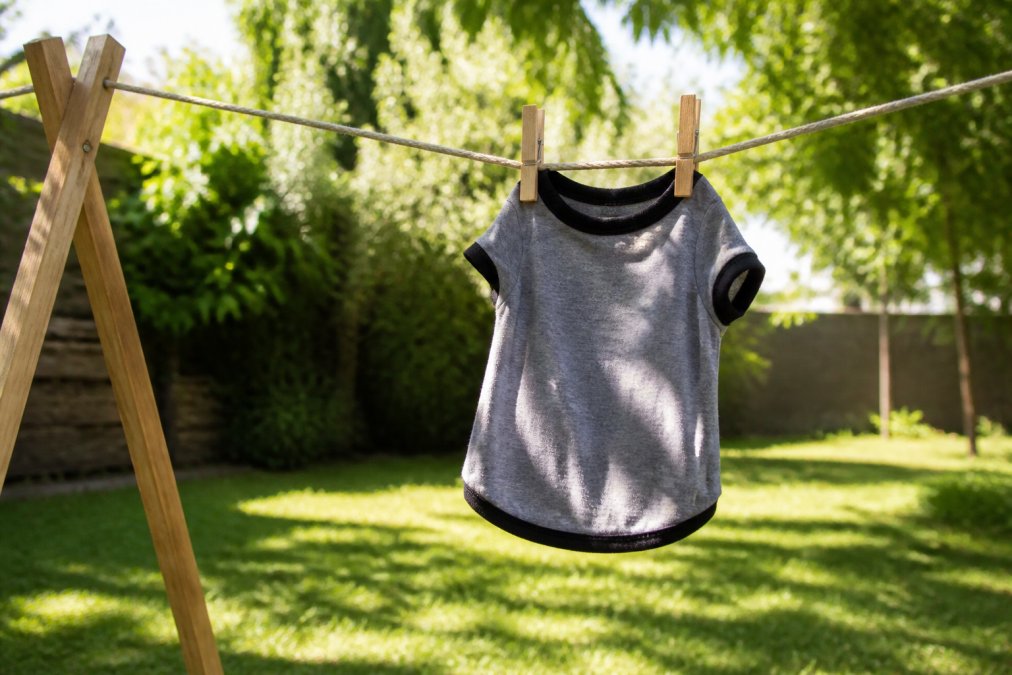
Machine drying should be avoided entirely for pet clothes. Even on low heat settings, tumble dryers expose fabrics to temperatures between 120-160°F, which causes fibers to contract and shrink permanently. What takes hours to air dry can be ruined in 30 minutes in a dryer.
Avoiding High Heat and Heat Damage
Heat is the enemy of fabric integrity. Temperatures above 130°F begin to cause permanent changes in most fibers. A single cycle in a hot dryer can shrink a shirt by 5-15%, depending on fabric composition. Repeated heat exposure compounds the problem, each wash-and-dry cycle causes additional shrinkage until the shirt no longer fits properly.
Moisture evaporation during air drying is a gentle, natural process. Fibers gradually release water without the shock of high heat, allowing fabrics to retain their original dimensions and elasticity.
Reading and Following Garment Care Labels
Garment care labels provide manufacturer guidance based on the specific fabric composition and construction of each shirt. These labels aren't suggestions, they're recommendations based on testing and experience.
Care labels specify water temperature using universal symbols. A single dot means cold water, two dots mean warm water, and three dots mean hot water. Most pet clothes display a single dot, indicating cold water washing is essential. The washing symbol shows a tub with lines underneath, lines indicate reduced agitation, the more lines, the gentler the cycle should be.
Drying symbols appear as a square on care labels. A dot inside the square means tumble drying is acceptable; an X through the square means no tumble drying. Many dog shirts have an X through the square, explicitly prohibiting machine drying. Temperature specifications on care labels refer to maximum safe temperatures, these are hard limits, not guidelines.
How to Stretch Out a Shrunken Dog Shirt
If your dog shirt has already shrunk, recovery is possible for mild to moderate shrinkage. Fill a basin with lukewarm water (around 70-80°F) and add a small amount of gentle hair conditioner or fabric relaxer. Submerge the shrunken shirt and let it soak for 15-20 minutes.
Remove the shirt and gently squeeze out excess moisture without wringing. Lay the shirt flat on a clean towel and begin gently stretching it back toward its original dimensions. Pin the stretched shirt to the towel using gentle pins at the edges. Leave it pinned for 24-48 hours as it air dries completely.
This recovery method works best for shrinkage of 5% or less. Severe shrinkage (10%+) is much harder to reverse because fibers have undergone more permanent changes. Prevention through proper washing and drying is always more effective than attempting recovery after the fact.
Step-by-Step Prevention Checklist
Follow this checklist every time you wash your dog shirts to prevent shrinkage and maintain garment quality over time.
| Step | Action | Why It Matters |
|---|---|---|
| 1 | Check the care label | Understand the specific requirements for this garment |
| 2 | Turn shirt inside out | Protects graphics and reduces friction damage |
| 3 | Use cold water only | Prevents fiber relaxation and shrinkage |
| 4 | Select gentle cycle | Reduces agitation and mechanical stress on fibers |
| 5 | Use mild detergent | Avoids harsh chemicals that weaken fibers |
| 6 | Don't overload machine | Ensures proper washing and rinsing |
| 7 | Remove promptly after washing | Prevents mildew and allows proper drying |
| 8 | Air dry completely | Eliminates heat damage from machine drying |
| 9 | Lay flat or hang loosely | Prevents stretching from moisture weight |
| 10 | Store in cool, dry place | Maintains fabric condition between wears |
Before your first wash:
- Read the care label completely
- Note the fiber content (cotton %, synthetic %)
- Verify the maximum water temperature
- Check the drying recommendations
During washing:
- Turn the shirt inside out
- Fill washer with cold water
- Add mild, color-safe detergent
- Select gentle or delicate cycle
- Avoid overloading the machine
- Skip fabric softener (it damages fibers)
After washing:
- Remove shirt immediately
- Squeeze gently to remove excess water
- Lay flat on clean towel or hang on clothesline
- Allow 6-12 hours for complete air drying
- Avoid direct heat sources
Storage and maintenance:
- Fold or hang in a cool, dry location
- Keep away from direct sunlight
- Avoid plastic storage bags (use breathable containers)
- Check periodically for signs of mold or moisture
Shrinkage doesn't have to be inevitable. By understanding how heat, moisture, and agitation affect fabric fibers, you can protect your dog shirts through every wash cycle. Cold water, gentle cycles, and air drying form the foundation of effective shrinkage prevention. At MyRadTee, we craft our dog shirts from quality materials designed to withstand proper care, and when you follow these guidelines, your favorite tees will maintain their fit and comfort for years to come. Start with the prevention checklist above, and you'll notice the difference after just a few washes.
Frequently Asked Questions
Q: Why do cotton dog shirts shrink in the wash?
A: Cotton fibers contract when exposed to heat and moisture, causing shrinkage. Heat and agitation in the wash cycle accelerate this process. Cold water washing and gentle cycles significantly reduce shrinkage risk. Pre-shrunk fabrics undergo treatment to minimize this effect, but cotton can still shrink. Synthetic blends shrink less than 100% cotton because synthetic fibers have greater fiber elasticity and resist moisture-induced contraction.
Q: What is the best water temperature for washing dog shirts?
A: Cold water is ideal for preventing dog shirts from shrinking. Cold water wash cycles reduce heat-induced fiber tension and moisture evaporation that cause shrinkage. Lukewarm water (below 60°F) is acceptable for lightly soiled garments. Avoid hot water entirely, as it accelerates shrinkage, especially in cotton. Always check the garment care label for specific temperature recommendations, as some blended fabrics may tolerate slightly warmer water if labeled as such.
Q: Can you reverse shrinkage in pet clothing?
A: Yes, you can stretch out a shrunken dog shirt using moisture and gentle tension. Soak the damp shirt in cool water with a fabric conditioner, then gently stretch it back to its original size while drying. Lay it flat or hang it to air dry while maintaining tension. This method works best on freshly shrunk items and synthetic blends. Severely shrunk 100% cotton may not fully recover, so prevention through proper laundry care is far more effective than attempting restoration after damage occurs.
Q: Is air drying better than machine drying for dog apparel?
A: Air drying is the best way to dry cotton pet clothes and prevents virtually all heat-related shrinkage. Hang drying or laying flat allows moisture evaporation without high heat exposure. If you must use a tumble dryer, use the lowest heat setting and remove the shirt while still slightly damp. Machine drying on high heat is the primary cause of shrinkage after washing. Air drying takes longer but preserves garment size, color, and fabric elasticity far better than any heat-based method.