
What to Wear for Long Walks With a Large Dog in Cold Weather
Table of Contents
- What to Wear for Long Walks With a Large Dog in Cold Weather: The Layering System
- Best Winter Gear for Dog Walkers: Hands, Feet, and Visibility
- How Long Should a Winter Dog Walk Be for a Large Dog?
- Cold Tolerance in Large Dogs: Double Coats, Body Temperature, and Breed-Specific Needs
- Winter Dog Walking Safety Tips for Ice, Rock Salt, and Frostbite Risk
- Gear Durability and Post-Walk Recovery for High-Activity Large Breeds
- Conclusion: Dress for the Walk You Actually Take
- Frequently Asked Questions
Last Updated: October 2, 2026
What to Wear for Long Walks With a Large Dog in Cold Weather: The Layering System
Cold-weather walks with a big dog fail for one reason: you dressed for the driveway, not the distance. Knowing what to wear for long walks with a large dog in cold weather comes down to a simple three-layer system.
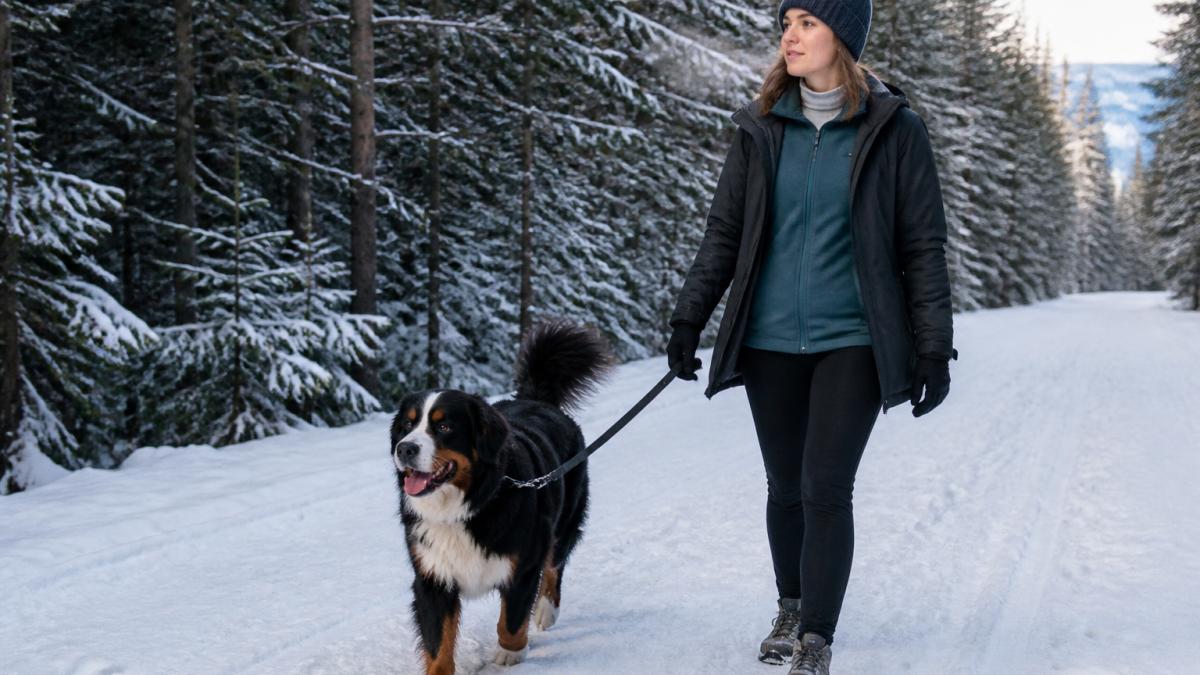
Here's the system in one line: a base layer that moves sweat away, a mid layer that traps heat, and a shell that blocks wind and wet.
| Layer | Job | Best Fabric | Skip It If |
|---|---|---|---|
| Base | Wicks sweat off skin | Moisture-wicking polyester, merino wool | You never sweat on walks |
| Mid | Traps body heat | Fleece, grid fleece, light down | Temps stay above 40°F |
| Shell | Blocks wind and rain | Waterproof, breathable membrane | It's dry and calm |
Base Layer: Moisture-Wicking Fabrics That Keep You Dry
Cotton is the worst base layer for a winter walk. It soaks up sweat and holds it against your skin, which is how you end up shivering two miles from home.
A common mistake is wearing a heavy base layer on a mild day. You overheat, sweat hard, then freeze when you slow down. Match the base layer to the temperature, not the calendar.
- Below 20°F: midweight merino or brushed polyester
- 20-35°F: lightweight synthetic base layer
- 35-45°F: thin wicking tee under a light mid layer
Mid Layer: Insulation That Moves With a Strong Leash Pull
A large dog can yank you forward without warning, so your mid layer needs to stretch and move. Grid fleece is the workhorse here. It traps warm air in the little squares while letting extra heat escape.
Skip bulky sweatshirts. They bunch at the shoulders and limit your reach when you need leash control. A fitted fleece or a thin down jacket gives you warmth without the bulk.
Outer Layer: Wind and Waterproof Shells for Long Exposure
Wind chill does more damage than temperature alone on a long walk. A waterproof, windproof shell is what keeps the cold from cutting through your mid layer. Look for a breathable membrane so sweat can still escape.
The shell should cover your hips and have a hood you can cinch. If snow is in the forecast, choose a shell with taped seams and a water-repellent finish.
Best Winter Gear for Dog Walkers: Hands, Feet, and Visibility
Your core can be perfectly layered and you'll still be miserable if your hands and feet are cold. The best winter gear for dog walkers solves the three weak points: grip, warmth, and being seen.
Leash Control in Gloves and Mittens
Mittens are warmer than gloves because your fingers share heat. But mittens can cost you leash control. The fix is a convertible mitten with a flip-back thumb and index finger, so you can grab a collar or clip a leash without bare skin.
Look for a grippy palm and a wrist cinch. A loose cuff lets snow in and heat out.
Reflective Material and Visibility Gear for Dark Evenings
Winter walks happen in the dark more often than not, and drivers can't avoid what they can't see. Reflective material on your jacket, your dog's coat, and the leash makes you visible from a distance.
How Long Should a Winter Dog Walk Be for a Large Dog?
Most large dogs do well with 20 to 45 minutes of walking in cold weather, but the right length depends on temperature, breed, and your dog's coat.
A simple rule: cut the walk in half when wind chill is severe, and split it into two shorter outings if your dog still needs the exercise. Large breeds with thick double coats often handle cold better than you'd expect.
Cold Tolerance in Large Dogs: Double Coats, Body Temperature, and Breed-Specific Needs
Cold tolerance in large dogs is not about size, it is about coat structure, body fat, and surface-area-to-volume ratio.
Single coat dogs have only the topcoat. Short, single-coated large breeds, Great Danes, Boxers, Weimaraners, Greyhounds, Dobermans, most pointers, lose body heat quickly because they lack the trapped-air underlayer.
Three physical factors drive how fast a large dog loses heat on a long walk:
Keep Calm and Walk Your Dog Retro Style T-Shirt →
- Surface-area-to-volume ratio. Large bodies lose heat more slowly per pound than small ones, which is why a Great Dane outlasts a Chihuahua in the cold, but only if the coat matches the breed.
- Body fat and condition. Lean, athletic large breeds chill faster than dogs carrying normal winter weight. A underweight senior dog loses heat fastest of all.
- Age and joint health. Older large dogs have stiffer joints and less efficient circulation to the extremities, so paws and ears get cold sooner even when the core is fine.
Breed-specific gear decisions follow from this:
- Northern double-coated breeds: skip the insulated coat; use a light, water-resistant shell only in wet snow or freezing rain. A heavy coat causes overheating and matting of the undercoat.
- Short single-coated breeds: insulated jacket plus a waterproof shell, and consider a fleece-lined belly panel to protect the thin-haired underside.
- Water-resistant double-coated retrievers: a light jacket in wind or wet, nothing in dry cold above 30°F.
Paws and ears lose heat fastest on any large dog because they have little insulation and high surface area.
Signs Your Dog Is Cold: Shivering, Lifting Paws, and Slowing Down
Your dog will tell you when the cold is too much. Watch for these signals:
- Shivering or trembling
- Lifting paws off the ground one at a time
- Slowing down or refusing to walk
- Whining or looking for shelter
- Curling into a ball or tucking the tail
- Holding one ear flat or pressing ears back against the head
If you see any of these, head home. Frostbite and hypothermia can set in faster than most owners expect, especially on paws and ears. A dog that stops mid-walk and lifts a paw is not being stubborn, that paw is cold enough to hurt.
Winter Dog Walking Safety Tips for Ice, Rock Salt, and Frostbite Risk
Ice and ice melt are the two biggest hazards on a winter walk. Rock salt and chemical deicers burn paw pads and can make your dog sick if they lick their feet. Ice causes slips that strain joints and lead to falls.
Follow these winter dog walking safety tips:

- Rinse and dry your dog's paws after every walk
- Use pet-safe ice melt at home
- Choose booties or a paw balm for long walks
- Take shorter steps and avoid icy slopes
- Keep your dog leashed near roads and driveways
Gear Durability and Post-Walk Recovery for High-Activity Large Breeds
A long walk with a strong large dog puts more stress on gear than a casual neighborhood loop. A 100-pound dog lunging at a squirrel can generate a shock load that snaps a thin clasp or rips a stitched seam. Gear that survives a ten-minute stroll can fail two miles from home in freezing weather, which is the worst possible place for a leash or coat to give out.
What Actually Fails on Long Walks
- Leash hardware. Thin snap hooks and lightweight swivel clips are the first failure point. Look for a leash with a solid brass or stainless steel snap and a welded D-ring on the collar or harness.
- Harness stitching. Bar-tacked or box-X stitching at stress points holds up; single-stitched seams on a cheap harness will pull apart under a hard pull.
- Coat closures. Velcro loses grip when it fills with snow and ice. Buckle or snap closures stay secure in wet, freezing conditions.
- Bootie soles. Thin rubber or fabric soles wear through on pavement and ice within a few walks. Look for a thicker, abrasion-resistant sole and a secure strap above the ankle.
- Paw balm. A wax-based balm holds up better on long walks than a thin lotion, which rubs off in the first quarter mile.
For a high-activity large breed, choose gear rated for the pull, not the pose. Reinforced stitching, metal hardware, and abrasion-resistant fabrics are the markers of gear built for distance.
Post-Walk Recovery for Large Joints and Thick Coats
Dry the coat properly. A thick double coat can hold moisture against the skin for hours after a snowy walk.
Warm the joints. Cold weather stiffens joints, and older large dogs feel it most.
Offer water. Cold weather suppresses thirst, but a long walk still dehydrates.
For you: peel off damp layers, hang them to dry, and change into something dry and soft.
Conclusion: Dress for the Walk You Actually Take
The hardest part of winter walking isn't the cold. It's matching your gear to the walk you really take, not the ten-minute loop you planned. Layer for sweat, wind, and distance, and protect the paws and hands that take the brunt of it. When you get home, dry off and change into something comfortable. MyRadTee makes soft, pet-inspired tees for exactly that moment, with sizing that runs true and a size chart on every product page. Shop now.

Frequently Asked Questions
What temperature is too cold to walk my large dog?
Most large breeds with double coats handle walks down to about 20°F, but wind chill changes the math fast. Below 20°F, shorten the route and watch for shivering, lifted paws, or slowing down. Below 0°F, skip the long walk and switch to quick bathroom breaks. Flat-faced and short-coated large dogs have lower cold tolerance, so treat 32°F as their practical limit for extended time outside.
How long should a winter dog walk be for a large dog?
Aim for 30 to 45 minutes in mild cold (30-40°F) for a healthy large breed. Drop to 15 to 20 minutes when temperatures sit between 20 and 30°F, and 10 to 15 minutes below 20°F. High-activity breeds like huskies and labs can go longer, but break the walk into two shorter outings rather than one long one when wind chill is harsh.
How do I keep my hands warm while holding a leash in freezing weather?
Mittens beat gloves for warmth because fingers share heat, but you lose leash control. Look for mittens with a leash grip or convertible mittens that fold back to free your fingers. A wider, padded leash handle also helps by spreading pressure so you can wear thicker insulation. Hand warmers tucked inside mittens add hours of comfort on long walks.
Should I wear layers or one heavy coat for long winter walks?
Layers win for long walks because your body temperature rises as you move and drops when you stop. A moisture-wicking base layer, an insulating mid layer, and a windproof shell let you vent heat by unzipping or removing a layer. One heavy coat traps sweat, which chills you once you slow down, and it gives you no way to adjust when the wind picks up.