
How to Spot Greenwashing in Clothing: 2026 Guide
Table of Contents
- What Greenwashing in Clothing Looks Like in 2026
- How to Spot Greenwashing: 7 Red Flags to Check Before You Buy
- Ethical Clothing Brand Red Flags: Transparency Gaps and Supply Chain Blind Spots
- Sustainable Fashion Certifications That Actually Mean Something
- FTC Green Guides Compliance: What Brands Can and Cannot Claim
- Greenwashing vs. Green-Hushing: Two Sides of the Same Problem
- Digital Product Passports, Resale Platforms, and Social Media Ads: New Greenwashing Frontiers
- Frequently Asked Questions
Last Updated: September 13, 2026
What Greenwashing in Clothing Looks Like in 2026
Greenwashing in clothing is the practice of making a brand appear more environmentally responsible than its actual garment production, material sourcing, or labor practices justify. The term covers everything from vague taglines to outright misleading labeling, and it has become harder to detect as sustainability language spreads across fast fashion.
This guide from MyRadTee walks through the specific claims, certifications, and transparency gaps that separate real effort from green marketing. MyRadTee is dedicated to celebrating the special bond between people and their dogs through high-quality, pet-inspired apparel. We offer a curated collection of comfortable, soft t-shirts featuring unique designs that allow dog lovers to showcase their passion for their furry friends.
Here's the uncomfortable part: most shoppers think they can spot greenwashing by looking for a leaf icon or the word "natural." That instinct fails constantly. The real signals live in supply chain transparency, third-party certifications, and whether a brand will tell you where its fabric comes from.
Below, we'll show you exactly how to spot greenwashing in clothing using a seven-point checklist, plus the newer tactics, like green-hushing and resale-platform spin, that most guides still ignore.
How to Spot Greenwashing: 7 Red Flags to Check Before You Buy
To spot greenwashing, check the specificity of every environmental claim, then verify it against a certification database or the brand's own supply chain disclosure. Vague language plus missing documentation equals a red flag, every time.
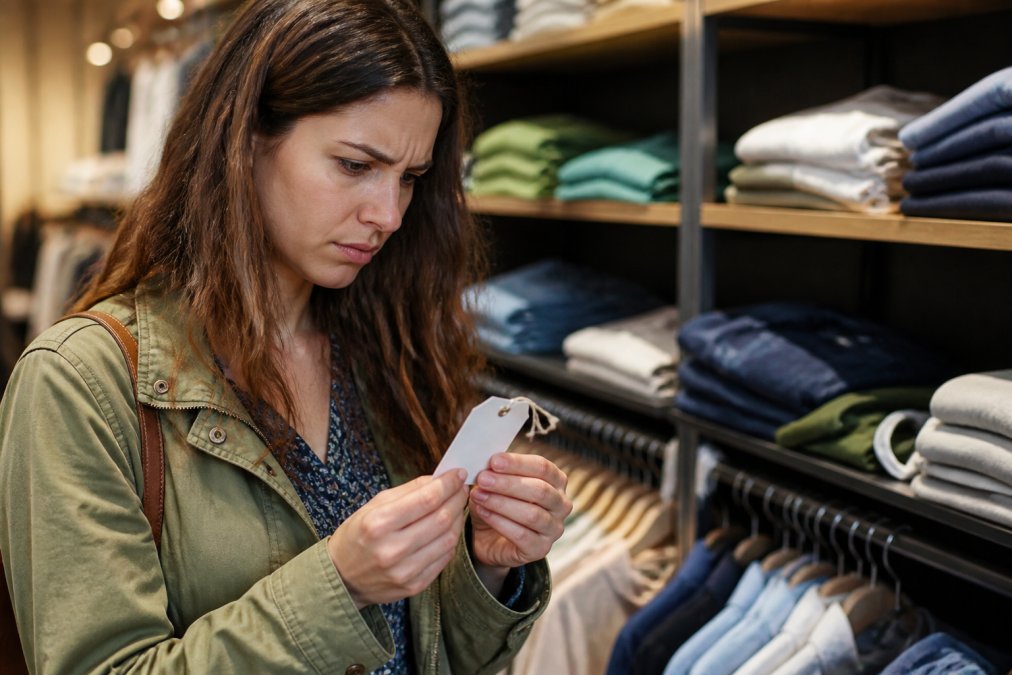
Run through these seven indicators before you reach the register:
- Vague environmental claims. "Eco-friendly," "green," and "planet-positive" mean nothing without a defined standard behind them.
- No supply chain transparency. If the brand can't name its mills or factories, treat every sustainability claim as unverified.
- Certifications that don't exist. Fake or self-invented seals are common. Check the certifying body's public database.
- Recycled content with no percentage. "Made with recycled materials" tells you nothing about how much.
- A single "conscious" collection. One eco line inside an otherwise high-volume catalog is a marketing device, not a production standard.
- No data on water usage, toxic chemicals, or carbon footprint. Real programs publish numbers. Performances don't.
- Sustainability messaging that never mentions labor practices or fair wages. Environmental claims without ethical manufacturing are half a story.
Vague Claims and Misleading Labels
Misleading labeling often hides behind words that sound regulated but aren't. In the United States, terms like "natural" and "eco-friendly" carry no legal definition for textiles, which is exactly why brands lean on them (the FTC).
A common mistake is trusting a hangtag over a certification database. If a label says "sustainable" but names no standard, no certifying body, and no measurable target, you've found a greenwashing indicator, not a commitment.
Eco-Friendly Collections That Miss the Mark
An "eco-friendly collection" is a capsule of products marketed as sustainable within a brand's broader catalog. The problem is structural: if the other 90% of garment production continues unchanged, the collection functions as cover rather than reform.
What most guides miss is that these collections often use the same synthetic fibers and dye processes as the main line, just with a different tag. Ask what percentage of total output the collection represents. If the brand won't say, that silence is your answer.
Ethical Clothing Brand Red Flags: Transparency Gaps and Supply Chain Blind Spots
The clearest ethical clothing brand red flags are missing factory lists, unnamed material suppliers, and sustainability reports that describe goals without publishing results. Brand accountability starts with disclosure, and disclosure is measurable.
Watch for these supply chain blind spots:
- No published list of factories or mills
- No named material sourcing partners
- Sustainability targets with no baseline data
- Overproduction signals, like constant deep discounting, that contradict circular economy claims
- Corporate social responsibility pages that describe values but never mention labor practices
Consumer due diligence works both ways here. You can't audit a factory, but you can check whether the brand names one.
Sustainable Fashion Certifications That Actually Mean Something
Sustainable fashion certifications matter only when an independent body audits the claim, defines the scope in writing, and publishes a result a shopper can look up. A logo a brand designs itself is not a certification, it is a graphic.
The fastest way to separate the two is to ask three questions about any seal on a hangtag: Who audits it? What does the audit cover? Can I search the certified entity by name? If any answer is missing, treat the seal as decoration.
Here is what the major certifications actually verify, and where each one stops:
- GOTS (Global Organic Textile Standard), audits organic fiber content and processing through the supply chain, including chemical inputs and wastewater treatment at certified facilities. Scope limit: it covers the textile supply chain, not the cut-and-sew factory's wage practices.
- OEKO-TEX Standard 100, tests finished articles and component materials against a list of harmful substances. Scope limit: it is a product safety test, not an environmental or labor standard. A shirt can pass Standard 100 and still be made in a factory with no disclosure at all.
- Fair Trade Certified, covers labor and wage standards at certified factories, with a premium paid to workers. Scope limit: it applies to the specific facility in the certification, not to every factory a brand uses.
- bluesign, audits chemical and resource management in textile production, restricting input chemicals at the mill level. Scope limit: it is a production-input standard, not a consumer-facing product claim about the finished garment's footprint.
- B Corp Certification, scores the whole company on governance, workers, community, environment, and customers. Scope limit: a company-level score, not a product-level one. A high overall score does not certify any single shirt.
Verification is the step most shoppers skip. Each of these bodies maintains a public database or certified-entity list where you can search the brand or facility by name. A common pattern in greenwashing is a brand displaying a certification logo while the brand itself does not appear in the certifying body's registry, sometimes because only a supplier was certified, sometimes because the certification lapsed. Searching the registry takes a minute and settles the question faster than reading the brand's sustainability page.
FTC Green Guides set the baseline for how environmental marketing claims can be worded, which is why a certification's scope matters as much as its existence. A seal that covers fabric processing cannot legally be stretched to imply the whole garment is sustainable, and the Guides are the reference point for where that line sits.
One more scope trap: certifications can be held by a supplier rather than the brand. A mill may be GOTS-certified while the brand using its fabric makes no certified claims of its own. When you see a certificate number, check whose name is on it, the mill's or the brand's. That distinction tells you whether the brand is accountable for the standard or just borrowing it.
FTC Green Guides Compliance: What Brands Can and Cannot Claim
FTC Green Guides compliance determines whether an environmental claim is legally defensible. The Guides are the agency's guidance on how marketers should substantiate claims like "recyclable," "compostable," and "made with recycled content," and they apply directly to apparel marketing.
Under the Guides, brands should:
- Qualify claims so they reflect real, measurable attributes
- Avoid overstating an environmental benefit
- Substantiate claims with competent and reliable evidence
- Clarify whether a claim applies to the product, the packaging, or the company
What brands cannot do is imply a broad environmental benefit from one narrow attribute. A shirt made partly from recycled fiber is not automatically "sustainable," and the Guides exist to close that gap. If a claim feels bigger than the evidence behind it, it probably is.
Greenwashing vs. Green-Hushing: Two Sides of the Same Problem
Greenwashing vs. green-hushing describes two opposite failures. Greenwashing overstates environmental effort; green-hushing understates it, where a company with genuine programs stays quiet to avoid scrutiny or legal risk.
Green-hushing is the lesser-known problem, and it costs consumers the same way. When credible brands bury their certifications and carbon footprint data out of caution, shoppers lose the reference points they need to compare products. The result is a market where the loudest claims win and the most transparent brands stay invisible.
The fix is the same on both sides: demand specifics. A brand that hides real data and a brand that inflates fake data both leave you unable to verify anything.
Digital Product Passports, Resale Platforms, and Social Media Ads: New Greenwashing Frontiers
Most greenwashing guides stop at hangtags. The three fronts below are where the tactics are moving, and where the current top-ranking articles are thinnest.
Digital Product Passports: the structural fix, and its limits
A Digital Product Passport (DPP) is a digital record, typically reached by scanning a QR code or NFC tag on the garment, that carries verified data about a product's materials, origin, repair options, and end-of-life handling. The concept is being built into product regulations abroad, and it is the most credible structural answer to greenwashing because it moves the burden from the shopper's guesswork to a traceable supply chain record.
What a DPP changes: instead of a brand asserting a claim on a tag, the claim is tied to a data record that can be audited and updated. What it does not change: a DPP is only as honest as the data fed into it. A passport that lists "recycled content" without a percentage, or names a material without a source, is the same vague claim in digital form. When you encounter one, read it the way you would read a label, look for specific figures, named suppliers, and a verifiable origin, not a green interface.
Resale platforms: why "buying secondhand is sustainable" needs a caveat
Resale and second-hand platforms are a newer frontier, and the claim worth questioning is the automatic one: that buying resale is inherently sustainable. Resale does reduce textile waste by keeping garments in use, and that is real. But it does not retroactively fix how the garment was made, and it does not address overproduction upstream, a platform can move enormous volumes of new-with-tags inventory while presenting itself as circular.
Watch for these resale-specific patterns:
- "Circular" branding on a platform whose core model is volume. Circularity claims sit awkwardly next to constant new-inventory drops and aggressive seller recruitment.
- New-with-tags listings at scale. Large volumes of unworn, tagged garments signal overproduction being routed through a resale channel rather than reduced.
- Shipping impact left out of the claim. Individual-item shipping has a footprint; a sustainability claim that ignores it is incomplete, not false.
- Resale framed as offsetting. Buying secondhand reduces demand for new production only if it actually displaces a new purchase, not if it is an add-on purchase.
The honest version of the resale claim is narrower than the marketing: resale extends a garment's useful life and diverts waste from landfill. That is worth doing. It is not the same as making the original garment sustainably.
Social media ads: spotting the pattern in seconds
Social ads are the easiest front to spot once you know the pattern, because the format itself constrains what a brand can show. A 15-second video cannot display a certification number, so the ad leans on atmosphere instead. Watch for:
- A green color palette and nature imagery with no certification shown. Mood is doing the work that evidence should.
- Claims in the caption that never appear on the brand's own website. If the ad says "sustainable" and the product page does not, the ad is the outlier, and the product page is the more legally careful document.
- "Limited edition" urgency paired with sustainability language. Scarcity and sustainability pull in opposite directions; a brand using both is optimizing for conversion, not production standards.
- Influencer posts describing a product as ethical without naming a standard. The creator is usually repeating a brief, not verifying a claim.
- Comment sections with sustainability questions left unanswered. A brand that engages on fit and shipping but goes quiet on sourcing is telling you where its evidence runs out.
The practical move is to screenshot the ad's claim, then search the brand's site for the same words. If the claim exists only in the ad, treat it as marketing copy, not a commitment.
EPA guidance on textile waste documents why reducing garment production volume matters more than any single label, which is the throughline across all three of these fronts. DPPs, resale, and social ads are different surfaces; the underlying question is the same one you would ask of a hangtag: what specific, verifiable fact is behind this claim?
Frequently Asked Questions
What are the most common examples of greenwashing in the fashion industry?
Common examples include vague terms like 'eco-friendly' or 'green' without proof, collections labeled sustainable while made from synthetic fibers, and brands promoting recycled materials without addressing overproduction. Another example is misleading labeling that highlights one small eco-effort while ignoring labor practices or supply chain transparency. These tactics make it hard for consumers to tell real sustainability from marketing spin.
How can consumers verify sustainability claims made by clothing brands?
Check for third-party certifications like B Corp, Fair Trade, or Global Organic Textile Standard (GOTS). Visit the brand's website to see if they publish supply chain traceability details, water usage data, or carbon footprint reports. Look for specific, measurable commitments rather than vague promises. You can also search the FTC's website for guidance on how brands should substantiate environmental claims under the Green Guides.
What red flags should I look for when shopping for ethical apparel?
Watch for vague claims like 'earth-friendly' without explanation, missing supply chain transparency, and a lack of third-party certifications. Be wary of brands that push 'eco-friendly' collections while still relying on fast fashion production cycles. Also, check if the brand discloses labor practices and material sourcing. If a brand cannot answer basic questions about where and how its clothes are made, that is a red flag.
Are there specific certifications that prove a clothing brand is truly sustainable?
Several certifications provide credible proof: B Corp measures overall social and environmental performance, Fair Trade focuses on labor practices and fair wages, and bluesign verifies safe and sustainable textile production. Look for these logos on product pages or the brand's sustainability report. Certifications are not perfect, but they require third-party audits, which reduce the risk of greenwashing.
How does greenwashing impact the environment and consumer trust?
Greenwashing misleads consumers into buying products that may not be as sustainable as claimed, which slows the shift toward truly ethical manufacturing and circular economy practices. It also erodes trust: when shoppers discover a brand exaggerated its environmental impact, they may become skeptical of all sustainability claims. This makes it harder for genuinely responsible brands to stand out and can delay meaningful action on textile waste and toxic chemicals.